Why we created our one-day marketing bootcamp
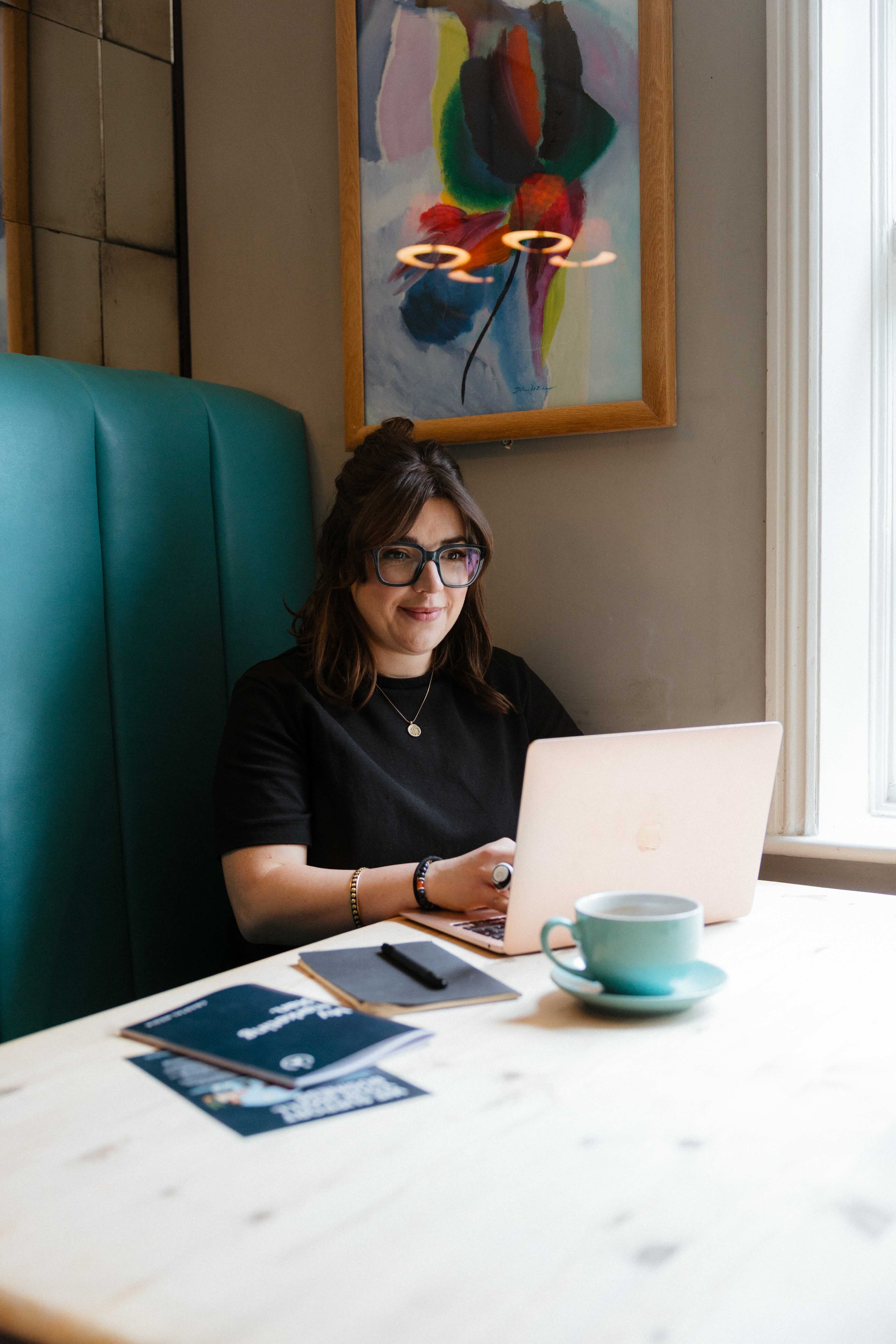
The One-Day Marketing Bootcamp wasn't something we initially sat down and planned.
It actually came from years of seeing the same thing happen over and over again.
We'd meet brilliant business owners who were working incredibly hard on their marketing. They'd listened to all the advice, signed up for courses, watched the webinars and were doing their absolute best to keep up with everything they were being told they should be doing.
They were posting on social media, trying to understand SEO, sending newsletters, networking, updating their websites and generally juggling marketing alongside the million other things that come with running a business.
Yet despite all that effort, many still felt stuck.
Some felt like they were constantly busy but weren't seeing the results they expected. Others felt overwhelmed by the sheer amount of marketing advice out there. Most felt like they were permanently behind and somehow failing to do all the things they should be doing.
What started frustrating us was that everyone seemed to be teaching people how to do marketing, but very few people were teaching them how to work out what marketing they actually needed.
Which sounds like the same thing, but it really isn't.
I could teach somebody how to use Instagram in a day. Lots of people could. There are thousands of courses online teaching people how to use Instagram. The problem is that if Instagram isn't the thing that's going to move your business forward right now, then all you've really done is become better at doing the wrong thing.
The same goes for SEO, email marketing, PR, Google Ads and pretty much every marketing channel you can think of.
The funny thing is that by the time people get to us, they often think they have a social media problem. In reality, they rarely have a social media problem at all. What they usually have is a clarity problem. They've become fixated on one particular marketing channel because that's the thing they can see, when actually the issue often sits somewhere else entirely.
We still get enquiries every week asking if we'll run Instagram training, help with Facebook, teach SEO or manage somebody's social media account.
In fact, one landed in our inbox recently from a business that was creating brilliant content. They had built a good audience, some of their posts were performing incredibly well and they wanted help understanding how to make their results more consistent and reach more people.
Five years ago, we might have offered them social media training.
Today, we wouldn't.
Which feels like a slightly odd business decision when people are actively asking to buy something from you.
But we've seen too many businesses spend money learning how to do something better when that thing wasn't actually the thing holding them back.
Whenever these enquiries come in, our response is usually very similar. We explain that whilst social media might be part of the answer, we'd want to understand the bigger picture first. Because what if the issue isn't reach? What if it's conversion? What if the messaging isn't landing? What if they're attracting the wrong audience? What if one small change elsewhere in the customer journey would have more impact than doubling their views?
Those are the questions we're interested in. And that's really where the bootcamp started.
The framework itself actually existed long before the bootcamp did...
A few years ago, I was delivering training to Visit England's Small Business Advisors. The feedback was incredible because the focus wasn't on channels or tactics. It was about helping people understand how marketing actually works and, more importantly, how to make good marketing decisions.
Around the same time, Matt was doing what Matt does best, which is looking at really big changes in behaviour and helping organisations understand what they mean.
Throughout his career he's advised organisations through some huge shifts. He worked on Digital TV Switchover, and as I write this, he’s finalising a report he’s writing for the television industry on the future of advertising in a world where people increasingly don't sit down and watch television in a live, linear way.
A lot of Matt's career has involved understanding complex systems, spotting patterns and helping organisations prepare for the future. In many cases he's the person writing the white papers that help shape thinking across an entire industry.
Then I come along and ask, "Yes, but what does that actually mean for a small business owner in Norfolk?" It's probably why we work well together.
Matt is brilliant at understanding the theory, the patterns and the frameworks. I'm good at taking those ideas and translating them into something that makes sense when you're juggling customers, suppliers, invoices, family life and everything else that comes with running a small business.
Somewhere in the middle of all of that, a framework started to emerge. One that helped businesses understand where they were, where they wanted to get to and, most importantly, what would make the biggest difference next.
Then we added the Norfolk layer
Then we added what we now jokingly call "the Norfolk layer". Because Norfolk is weird. And I say that with enormous affection.
What works in London won't always work in Norfolk. Most people accept that. What people don't always realise is that what works in Norwich won't necessarily work in Cromer. What works in Cromer won't necessarily work in Wells. What works in Wells won't necessarily work in Fakenham. What works in a village outside Norwich might be completely different to what works in the city centre.
In fact, two businesses doing exactly the same thing on the same street could need completely different marketing plans.
One might need more awareness. One might need better conversion. One might need to focus on existing customers. One might need entirely new ones.
The answer depends on where they are now, what they're trying to achieve and what their marketing funnel currently looks like.
After working with hundreds of businesses, we've become convinced that most small businesses don't necessarily need more training on individual marketing channels. They need clarity on where to focus their energy so they're doing the right thing, at the right time, in the right way, for the right people. The framework gave us a way of helping businesses do exactly that.
Eventually we talked to North Norfolk District Council about delivering the framework through their Future Skills Now programme. The original version was a ten-week course, part-funded by the council, and we absolutely loved running it.
The feedback was incredible, but what stood out wasn't that people were learning marketing. What stood out was that people were finally making sense of their businesses.
You'd watch somebody spend weeks convinced they needed to completely overhaul their social media, only to realise that wasn't the issue at all. Somebody else would discover they'd been talking to entirely the wrong audience. Another business owner would realise they could stop beating themselves up about not doing something they'd convinced themselves was essential.
There was a huge amount of relief in those rooms. And there were a lot of lightbulb moments.
As the programme grew, we started getting enquiries from people who wanted to join but couldn't access the funding. Others loved the concept but simply couldn't commit to ten weeks.
So we shortened it. Then people asked if we could make it shorter. So we shortened it again. Then people asked if we could make it even shorter. Eventually somebody asked whether we could do it all in a day. Our immediate reaction was probably something along the lines of, "Absolutely not." But the more we thought about it, the more we realised that what people were getting from the programme wasn't necessarily the ten weeks. What they needed was the framework, the space to think and the opportunity to step away from the day-to-day running of their business for long enough to look at everything properly. Once we realised that, creating the One-Day Marketing Bootcamp suddenly seemed obvious.
And that's how the bootcamp was born
Today the bootcamp has become a monthly fixture and genuinely one of my favourite things we do.
There are only ever six businesses in the room, which means everyone gets individual support and everyone gets the chance to share what's happening in their business. Matt and I run the day together and I genuinely think that's part of why it works. You get both brains. Matt explaining the theory and frameworks. Me translating that into what it actually looks like in the real world. His big-picture thinking. My practical application. His ideas. My stories. It somehow works.
My favourite part of every bootcamp is still the same as it was when we were running the ten-week programme. At some point during the day, somebody will suddenly stop, look down at their workbook and say, "Oh my God. That's why that isn't working." A few minutes later somebody else will usually join in with, "Wait... that's why mine isn't working too."
Sometimes the realisation is that they've been talking to the wrong audience. Sometimes it's that they're focusing on the wrong marketing activity. Sometimes it's simply the relief of discovering they can stop trying to do the thing they've hated doing for the last two years because it was never the right answer in the first place. Those moments never get old.
Perhaps that's why we've never been tempted to run paid courses purely on Instagram, SEO or Facebook (and why we are careful about how we frame our free workshops). The reality is that most businesses don't always need more information. They need clarity. They need space to step back, look at the bigger picture and understand what will actually make a difference to their business.
Anyway, that's how the bootcamp happened. It wasn't some grand business plan or a service we sat down and decided to create. It was years of seeing the same problem come up again and again, building something that helped solve it, and then gradually making it more accessible as more businesses wanted to take part.
We still absolutely love running them. Not because we're teaching marketing, although obviously we enjoy that bit too, but because every single bootcamp has those moments where something suddenly clicks for somebody.
At some point during the day, someone will look up from their workbook and say, "Oh my God. That's why that isn't working."
A few minutes later somebody else across the table will usually say, "Wait... that's why mine isn't working too."
Those conversations, the connections that get made between businesses and the confidence people leave with are probably the reason the bootcamp has become such a permanent fixture in our calendar.
And because we're lucky enough to spend our days surrounded by small business owners, we get to watch what happens afterwards too. We see people stop wasting energy on the wrong things. We see them become more confident in their decisions. We see businesses grow.
Which, when you think about it, was the whole point in the first place.
So what actually happens on the day?
A few practical details before I finish, because if you've made it this far you're probably wondering what the bootcamp actually involves.
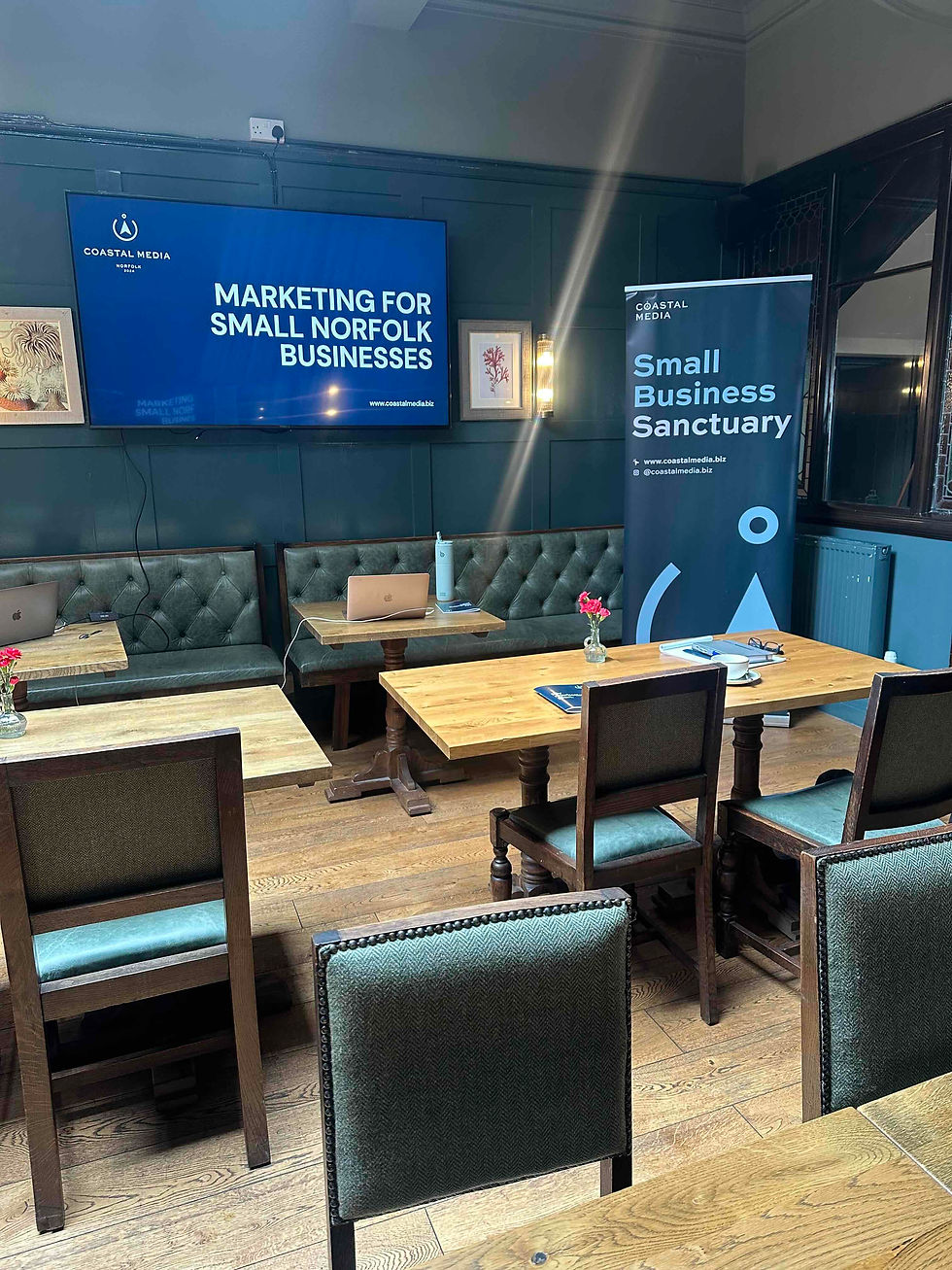
We run it once a month at The Cliftonville in Cromer and there are never more than six businesses in the room. It runs from 9.30am until 5.30pm, includes lunch, tea and coffee throughout the day, a printed workbook and a full day working through your business with both Matt and I.
The small group size is really important to us. We could fit more people in the room, but that isn't the point. The value comes from being able to sit with people, talk things through, challenge assumptions, answer questions and help them build a plan that's right for their business rather than giving everyone the same generic advice.
By the end of the day you'll leave with a completed workbook, a much clearer understanding of your marketing funnel and, most importantly, a prioritised plan of what to do next.
It's £175 including VAT, which is probably less than many businesses spend each month boosting Facebook posts they're not entirely sure they should be boosting in the first place.
And if you've read this entire blog and are still thinking, "Yes, but can you just teach me Instagram?"
The answer is still no.
Although if you come on the bootcamp and, having looked at your business properly, we decide Instagram is exactly what you should be focusing on, we'll absolutely help you work out what to do with it.
The difference is that we'll know why you're doing it.
And that's the bit that matters.


Comments